Heritage
The Forgotten Ritual Of Hair Oiling, And Why It's Returning
By Layla Nassar · 7 minute read · 12 June 2026
It left the West with the arrival of the shampoo aisle. It never left anywhere else.
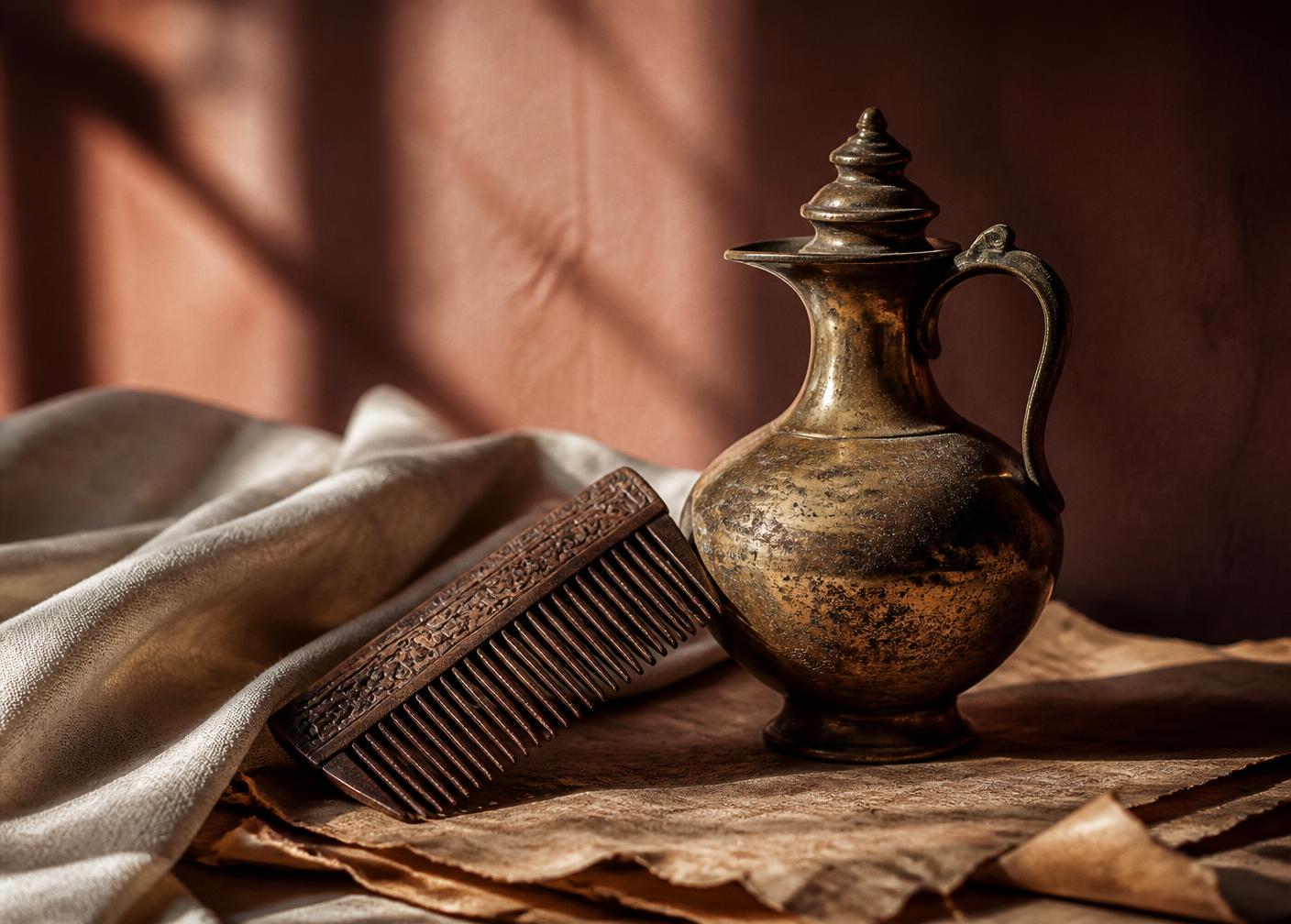
For most of recorded history, oil was not a step in a hair routine. It was the routine. Across the Levant, the Gulf, North Africa, South Asia and the Mediterranean, oil was warmed, worked through the scalp with the fingers, left to sit, and combed out. The ingredients changed with the geography. The gesture did not.
What broke the habit in much of the world was not evidence. It was distribution. Industrial detergents arrived cheaply and promised a new kind of clean — squeaking, immediate, easy to photograph. Oil, by comparison, asked for patience and left the hair looking wet for an hour. It lost on convenience, not on merit.
A tradition does not disappear. It waits, in someone's kitchen, for the fashion to come back around.
What actually survived
In the households where oiling never stopped, it survived as something closer to a family practice than a beauty regime. It was often done for you rather than by you — a mother, an aunt, a sister sectioning the hair and taking her time. The conditioning was almost incidental. The attention was the point.
That is the part the modern version keeps losing. A hair oil applied in forty seconds before bed is a product. The same oil applied slowly, with the scalp massaged first, is the thing people have been describing for a thousand years.
Why now
Two things converged. Chemically stripped hair became a widely felt problem rather than a niche one, and a generation raised on speed began looking for reasons to slow down. Oiling answers both, which is unusual — most care rituals solve one and cost you the other.
So the ritual is returning, and mostly to the same instructions it always had: warm it, work it in, leave it, comb it out. Nothing about that has needed improving.