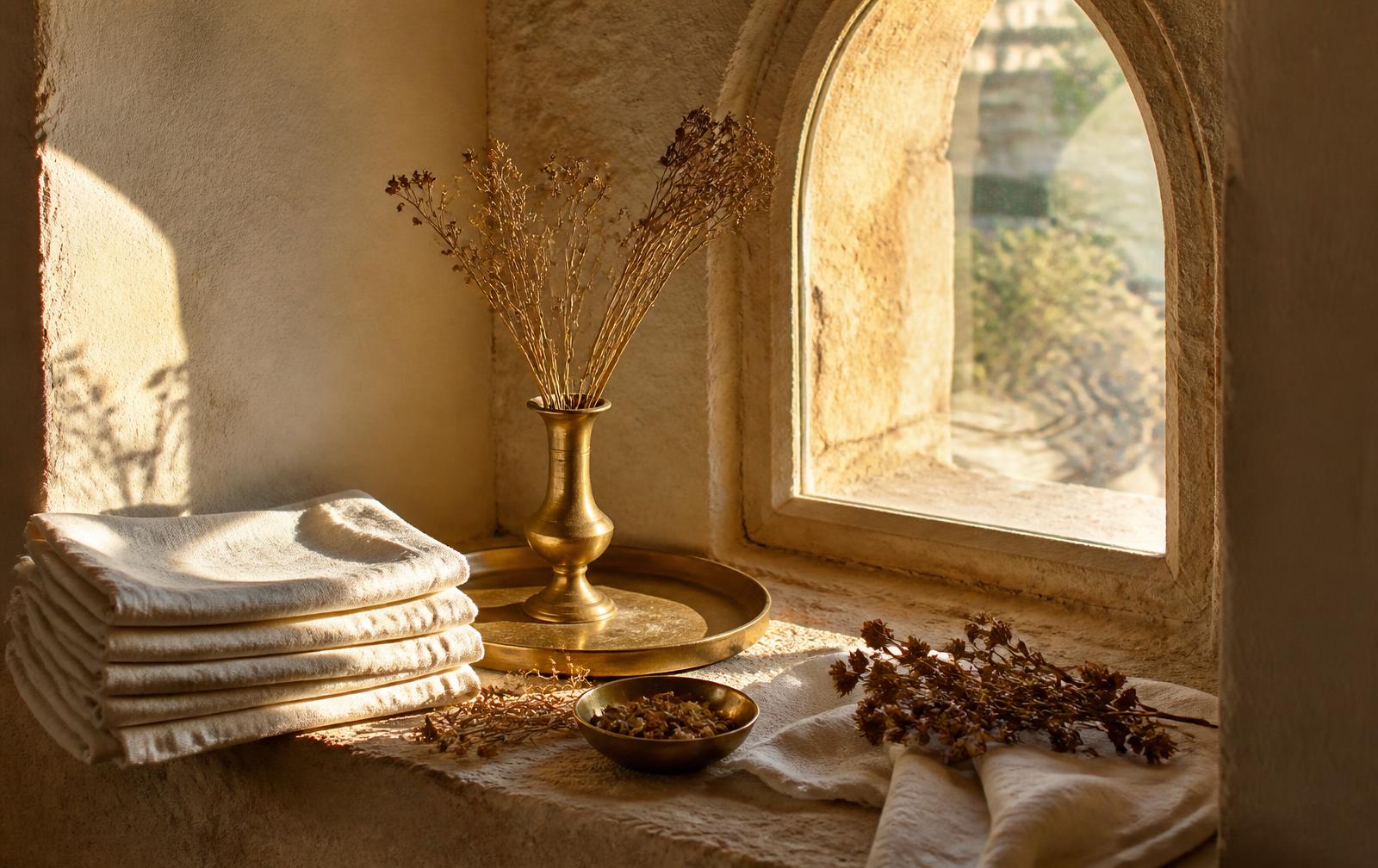
Heritage
Where Hair Oiling Began
By Nour Haddad · 6 minute read · 28 May 2026
Long before it was a beauty trend, it was an act of care passed hand to hand.
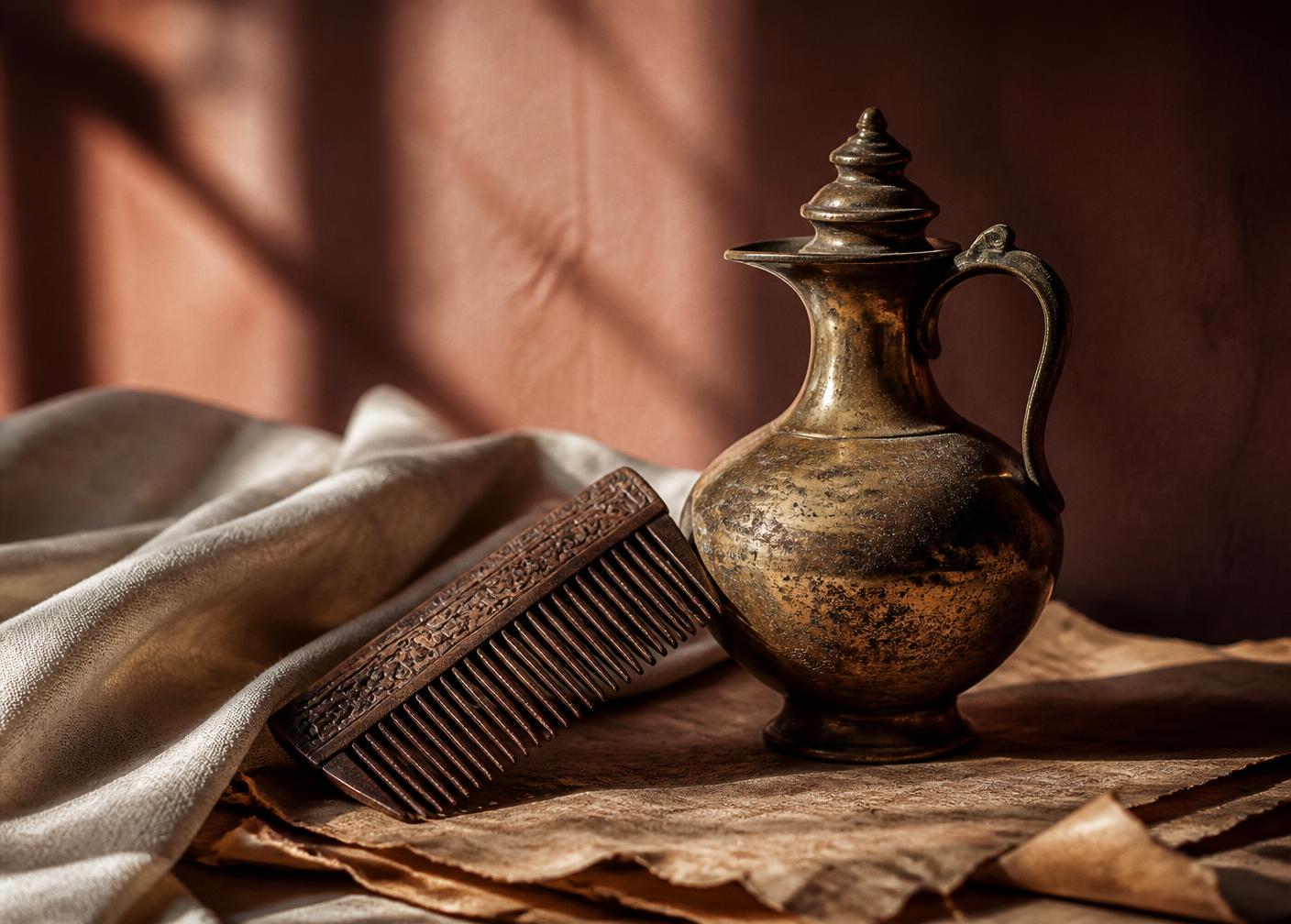
The oldest evidence we have is not written down. It is in the objects — combs carved for oiled hair, small vessels with narrow necks made to pour slowly, residue found in containers buried with people who wanted to take the practice with them.
Written records come later, and they are strikingly practical. Recipes, quantities, instructions on warming. Very little of it is framed as beauty. Most of it is framed as upkeep, in the way you would maintain leather or wood: something valuable that will last if you feed it.
Hair was treated as an inheritance. You maintained it because it had been handed to you.
Passed hand to hand
Across very different cultures the practice shares one detail: it is usually performed by someone else. That fact travelled further than any single recipe. Oiling is one of the few care traditions built around touch between people rather than a person and a mirror.
Which is why the version most of us practise now — alone, at night, before sleep — is a translation rather than a copy. It keeps the method. It has to work harder to keep the meaning.